
Introduction
Generally speaking we have two options when it comes to WAN interconnects - either Point to Point or Point to Multipoint
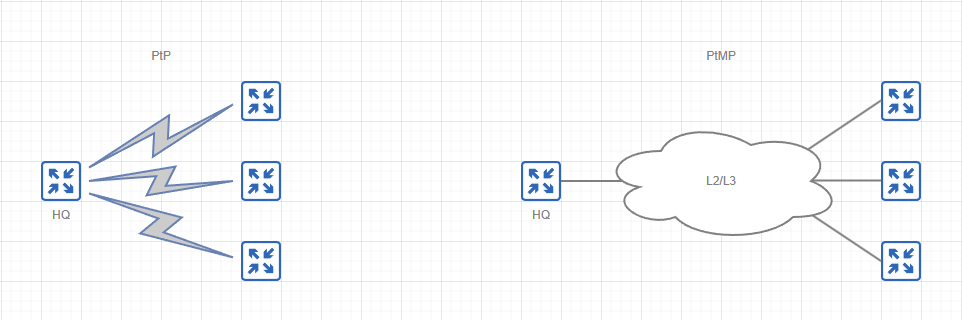
And while being perfectly normal for some of the use cases, in some others you might want to start thinking of adding more devices, circuits and even introducing different service providers to increase redundancy of the network. Say something like this
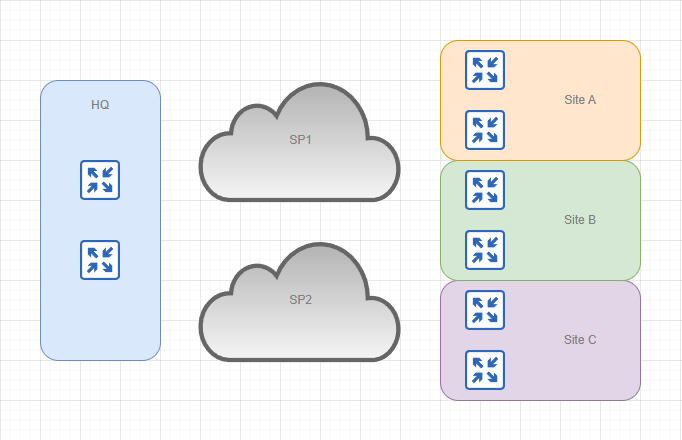
Looking at the above diagram the chances are that you are already thinking of the challenges and complexity that comes with such architecture. Specifically of the following:
- What type of transport do we chose ? MPLS comes at a cost and is reliable. Internet, on the other hand, is less reliable but way cheaper.
- Say we chose MPLS as our preferred path and Internet as a backup. What do we do with Routing ? Unless you decide to run BGP at your Edge routers, your Internet might just as well become primary because of the Routing protocols administrative distance and metrics and you will have to change those while also thinking of redistribution where needed.
- MPLS route exchange is normally unencrypted and while it's possible to run something like IPsec over it to protect data plane, you will still be sharing your routes (not necessarily all of them) with the third party from the transport perspective.
- What about management ? Your only option here is some sort of a CLI access to all of the devices which is more or less fine given that engineers used to do that for a very long time
With all of this in mind, you might already start thinking if there is a solution that reduces complexity while also providing centralized management and visibility for such a deployment and the chances are that there is one